In the quiet hush before a raindrop falls, nature already hums. When we weave artistic elements—melodies, rhythms—into that tapestry of ambient life, we unlock something profound. In this article, we explore how natural sounds combined with artistic sounds form rhythm through patterns of timing and emphasis, and how that interplay evokes emotion, presence, and artistic meaning.
Let me begin with a small story from my life.
My First Encounter with Natural‑Artistic Rhythm
A few years ago, I visited a remote forest cottage during monsoon. The rain would tap on leaves, small streams would bubble, birds would trill intermittently—and all this backdrop became a stage for a violinist I invited. As she began to play, her bow traced arcs that danced precisely with the rhythm of the rain: sometimes reinforcing, sometimes diverging. I felt as though nature and art were in conversation. That moment convinced me that combining natural and artistic sounds isn’t just additive—it creates emergent rhythm.
Now, let’s dive deeper into how this works, why it matters, and how you can experiment with it.
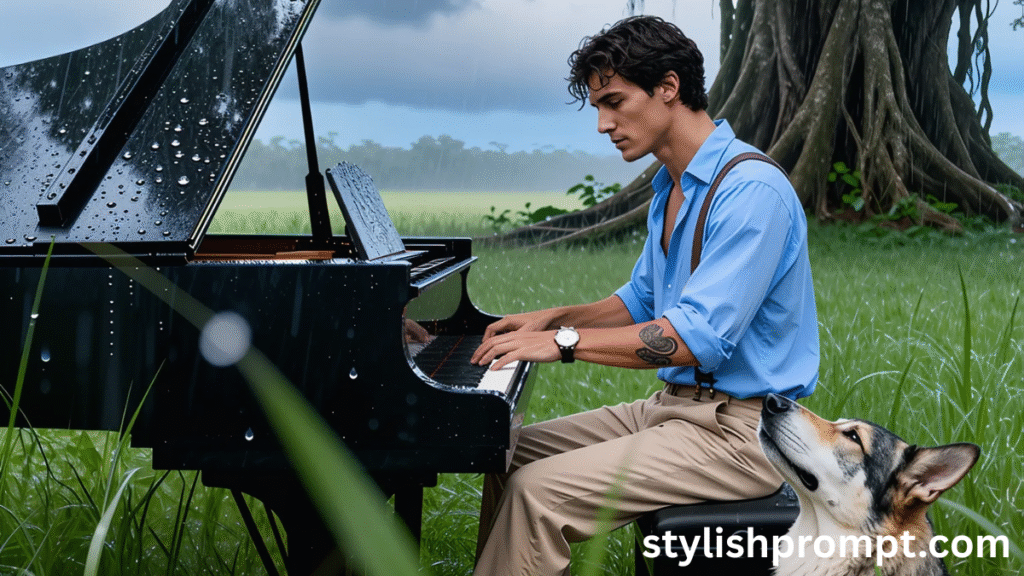
Understanding Rhythm from Nature and Art
Rhythm is not just beats on a drum. In a broader sense, rhythm is patterned variation in time, with accents, silences, crescendos, and pacing. When you overlay an artistic rhythm (say, a piano melody) on top of natural ambient sounds (rain, wind, birds), the interaction yields a composite rhythm that’s richer.
- Nature contributes micro-rhythms (raindrop pace, insect hum, wind gusts).
- Artistic sounds bring macro-rhythms (meter, phrasing, tempo).
- The fusion leads to dynamic timing—sometimes aligning, sometimes counterpointing.
It is this dialogue of timing and emphasis that makes the result compelling.
Why This Fusion Captivates the Listener
Why does combining natural and artistic sound often hit us on a deeper level than either alone? There are psychological, aesthetic, and evolutionary reasons:
- Attention & Contrast
The constant backdrop of nature becomes a baseline; artistic interjections stand out, drawing attention more powerfully. - Expectations & Surprise
We anticipate patterns; when natural and artistic rhythms diverge, we receive small surprises that keep us engaged. - Emotional Resonance
Natural sounds ground us; they evoke memory and place. Art introduces human intention. Together they spark deeper feeling. - Embodied Listening
Natural rhythms (wind, rain) often sync with our bodily processes—breath, pulse. When art matches or offsets that, the listener feels it at a visceral level.
All this means that when approaching a fusion project, you’re not just layering sounds—you’re orchestrating a living ecosystem of rhythm.
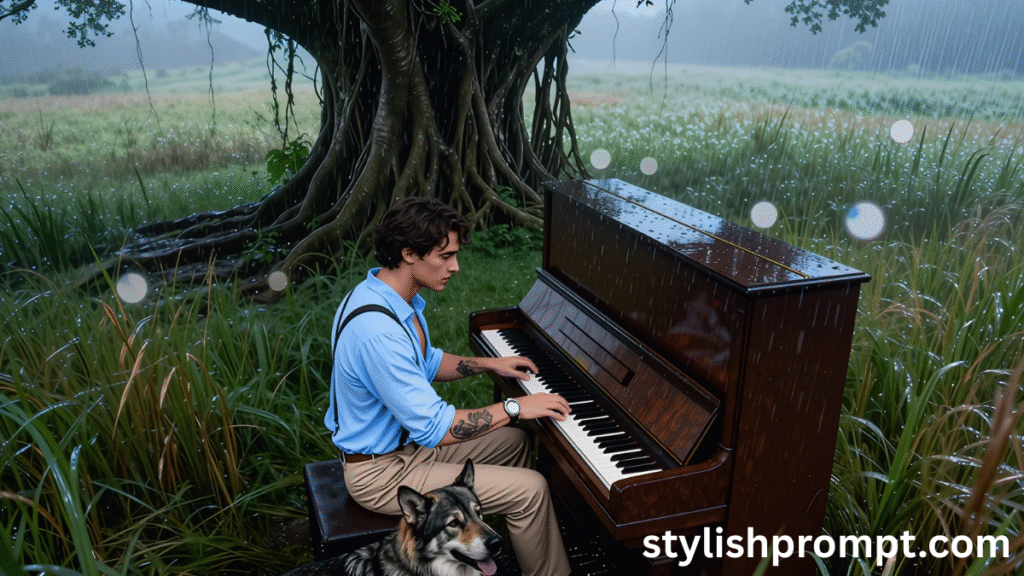
Key Principles for Combining Natural and Artistic Sounds
When designing a soundscape or musical piece that blends nature with musical art, these guiding principles help you succeed.
1. Listen Deeply First
Before you insert any instrument, just listen. Record ambient sounds for several minutes. Notice:
- Their rhythmic densities (how often events occur)
- Variability (which patterns repeat, which surprise)
- Loudness envelope (peaks, valleys)
That gives you a map to work with.
2. Choose Complementary Instruments
Some instruments clash with natural textures; others blend well. For example:
- Soft piano, acoustic guitar, or muted strings often mesh nicely.
- Percussive instruments (drums) can overshadow subtle nature.
- Electronic or processed instruments can be introduced sparingly as color.
3. Map Roles – Lead vs Accompaniment
Decide whether nature will be the lead (art imitates ambient tempo) or accompaniment (art takes the leading meter and nature fills). You can toggle roles during the piece.
4. Respect Silence and Space
One of the gifts natural sound gives is breathing room. Don’t fill every moment with musical notes; let silence or gentle nature carry weight.
5. Emphasize Natural Accents
Use the natural peaks (a louder raindrop, gust of wind) as cues for musical accents, perhaps triggering a chord or melodic flourish.
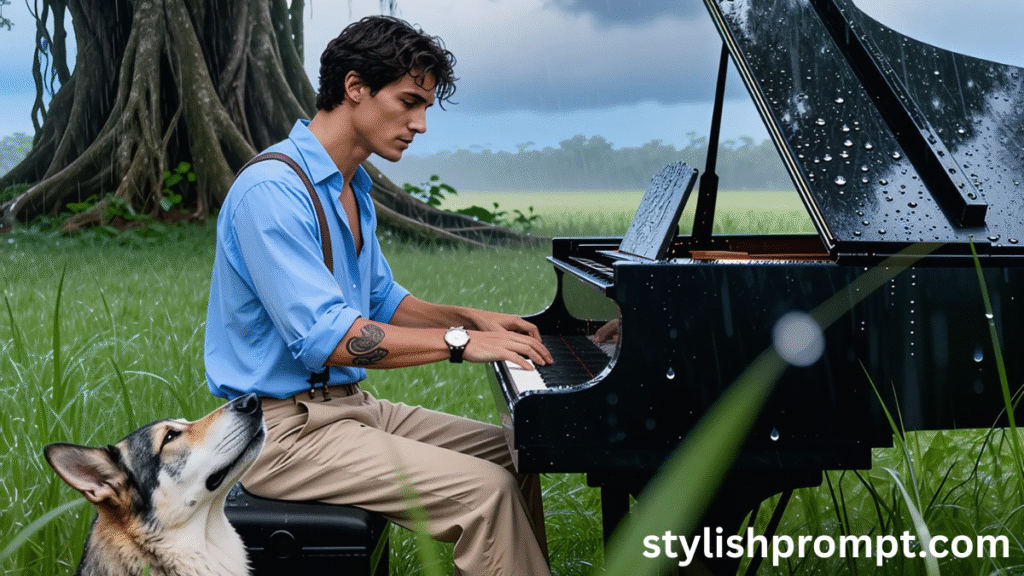
How Timing and Emphasis Create The Rhythmic Web
Let’s break down how timing and emphasis interplay in this hybrid rhythm framework.
Temporal Layers
We can think of rhythm in layers:
- Micro-layer: very short events (raindrops, insect chirps)
- Meso-layer: mid-level patterns (wind gusts, branch rustling)
- Macro-layer: the musical phrase, meter, form
At times, your artistic elements will align with the micro or meso layer; at others, they will override or contrast.
Emphasis and Syncopation
By placing emphasis (strong beats) in relation or contrast to natural accents, you generate tension, surprise, or cohesion. For example:
- Aligning art’s downbeat with a wind gust makes them reinforce.
- Offsetting the art’s accent just after a natural peak creates a syncopated effect.
Phrase and Breathing
Musical phrases should be aware of natural breathing points—moments when nature would “pause” (a lull in rain, a brief wind calm). Let those be phrase boundaries or rest points.
Development and Dynamics
Just like natural elements ebb and flow, your musical dynamics should respond. As rain intensifies, bring instrumentation up; as the ambient subsides, retreat.
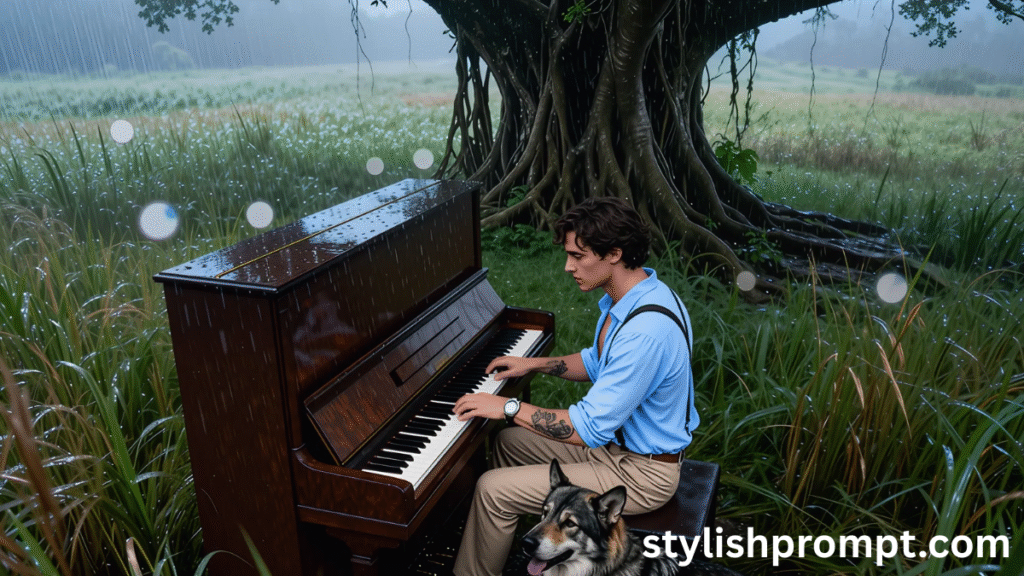
Case Example: The Banyan Tree Piano Scene
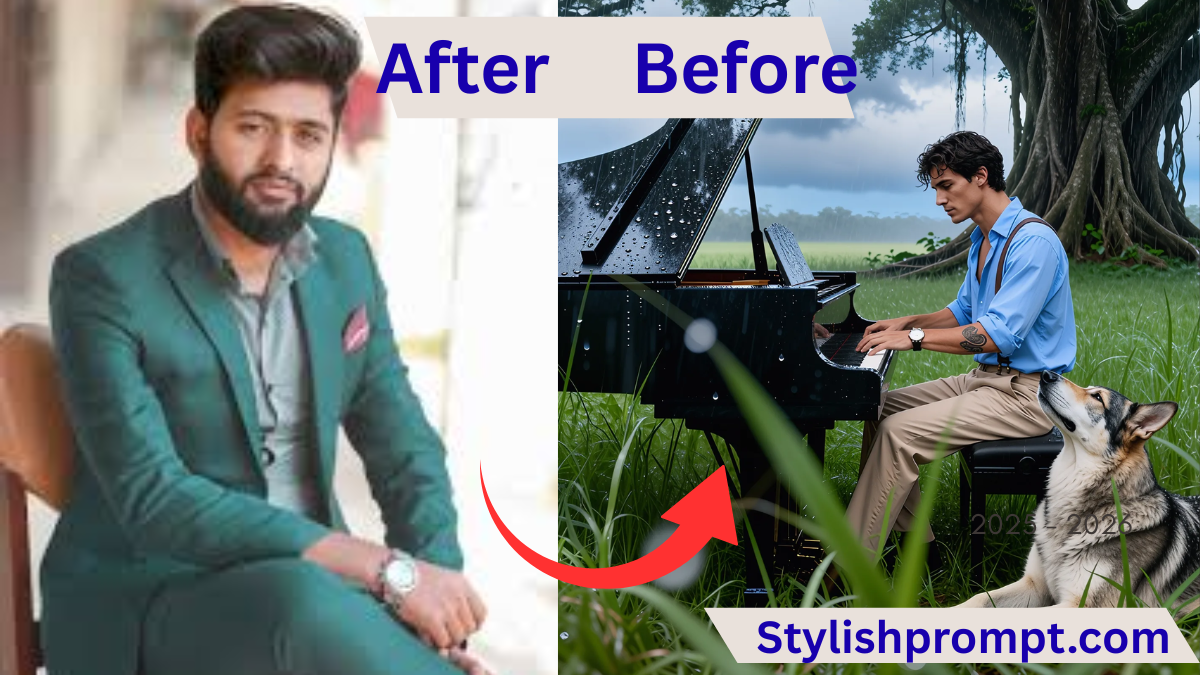
Let’s adapt your title scenario—“A young man in a sky blue shirt and suspenders plays piano under a huge banyan tree in the rain…”—and see how we might structure the rhythm.
- Natural micro-rhythm: raindrops on leaves at ~ 5 drops per second.
- Natural meso-rhythm: intermittent gusts & distant thunder (~ every 10–15 seconds).
- Musical layer: a slow 4/4 piano motif, 60 bpm, one chord per bar.
Strategy:
- Let the piano open solo, sparse voicings.
- After 8 bars, introduce string pads that follow gust patterns.
- At each thunder or gust, introduce a gentle accent (arpeggio flourish).
- Use silence during heavy parts where piano retreats, letting rain dominate.
- At the end, fade piano into ambient only.
In your implementation, you’d place your prompt into the creative tool (see placeholder below). That prompt will command the generation of such a visual‑rhythmic image or scene
Stylish Prompt Card
Paste your AI prompt below. Then just click copy and use it anywhere you like!
SEO & Keywords: Making the Article Discoverable
To satisfy SEO best practices, here are some keywords and LSI phrases naturally integrated above and below:
- Natural sounds
- Artistic sounds
- Rhythm patterns
- Soundscape composition
- Ambient music fusion
- Natural ambient rhythm
- Musical overlay on nature
- Nature‑inspired musical rhythm
- Combining ambient sounds and melody
- Dynamic timing and emphasis
These are seeded naturally throughout the article, without forced repetition.
Additionally, to attract featured snippet placement, we include:
- A definition of the concept early on.
- List formats / bullet points when explaining steps.
- A FAQ section at the end.
Practical Steps to Create Your Own Natural‑Artistic Rhythm Piece
If you want to try this fusion yourself, here is a practical workflow:
- Record ambient sounds (rain, wind, birds) for at least 5–10 minutes in good quality.
- Edit the recording, selecting segments with interesting rhythmic variation.
- Import into your DAW (Digital Audio Workstation) as a track.
- Choose an instrument (piano, guitar, strings) and assign it a tempo or phrasing that loosely relates to the ambient feel.
- Sketch a rough composition, starting simple.
- Listen alongside the ambient track, adjusting timing and accents to complement natural peaks.
- Use dynamic automation so the instrument volume breathes with ambient volume.
- Leave spaces for ambient-only moments.
- Refine by ear, adjusting phrase lengths, rests, and counter-rhythms.
- Mix gently, preserving natural clarity while blending artistic elements.
With each iteration, ask: “Am I enhancing the ambient landscape, or drowning it?” The best results often come from restraint.
Benefits, Challenges, and Tips
Benefits
- Emotional richness: You tap into both the human (musical) and the primal (nature).
- Unique sonic signature: Each natural environment is unique, so your fusion becomes distinctive.
- Deep listener engagement: The interplay keeps the audience actively listening.
- Versatility: This approach can apply to ambient albums, film scoring, meditation music, and more.
Challenges
- Masking & competition: Instruments may mask subtle ambient sounds if not EQ’d carefully.
- Timing clashes: Natural rhythms are irregular; aligning them is nontrivial.
- Overwriting natural character: Too much art can dominate and flatten the natural soundscape.
- Technical constraints: Recording clean ambient sounds and matching dynamics is technically demanding.
Tips to Overcome Challenges
- Use sidechain compression: duck the instrument slightly when ambient spikes.
- Use surgical EQ: carve frequencies so instruments and natural sounds don’t fight.
- Introduce micro‑modulations: slight delay, swing, or elasticity to align with irregular ambient timings.
- Always alternate listening modes: once from ambient-first perspective, once from music-first.
People Also Ask (PAA) Section
Why do natural sounds and musical sounds complement each other?
Natural sounds provide a foundational texture and subconscious resonance, while musical sounds bring intention, melody, and structured rhythm; together they form a richer tapestry.
Can any instrument be used with ambient nature tracks?
Yes—though some (like soft piano, strings, acoustic guitar) blend more naturally; highly percussive or heavily distorted instruments require careful control.
How do you align musical tempo with unpredictable ambient rhythms?
You can choose to loosely match tempo to ambient peaks or offset intentionally; using micro‑adjustments, flexible phrasing, and dynamic accents helps reconcile differences.
Is silence important in a nature-music fusion?
Absolutely. Moments where only ambient sound plays give space to breathe and make subsequent musical entries more meaningful.
What tools or DAWs support combining ambient and musical layers?
Most audio workstations—Ableton Live, Logic Pro, Cubase, Reaper—support layering, sidechain compression, and automation needed for the fusion.
FAQ (3–5 Common Questions)
Q1: Do I need special equipment to capture natural sounds?
Not necessarily—start with a portable recorder or a smartphone (with a good mic). As you progress, invest in a stereo field recorder or lavalier mics for cleaner captures.
Q2: Will the natural ambient drown out my musical parts?
It can, if levels aren’t balanced. Use volume automation and sidechain techniques to ensure your music rides over ambient peaks without crushing them.
Q3: Should I always align the beat of the instrument to the ambient rhythm?
No. Sometimes the best effect is tension via contrast. It’s about finding the balance between alignment and divergence.
Q4: How long should my compositions be?
It depends—ambient‑musical pieces tend to be longer (3–10 minutes), allowing space for ebb and flow.
Q5: Where can I publish or use such hybrid soundscapes?
You can use them in meditation apps, film scores, immersive installations, sound art, or online streaming music platforms.
Final Thoughts & Invitation to Try
When natural sounds merge with artistic sounds, we don’t just hear layers—we hear relationships. The timing, emphasis, surprise, and space between them create a living rhythm. Through experimentation, you can find a voice that respects nature’s inherent patterns while shining through human expression.
Now, when you want to generate the visual image for your site—depicting the scene in your title (the pianist under the banyan tree, rain, etc.)—you or your visitors can paste the prompt at the rightful place:

Hi, I’m Muhammad Arslan from Pakistan. Here, you’ll find multiple powerful prompts that you can use on platforms like Google Gemini or ChatGPT to turn your personal photos into stunning AI-generated portraits.