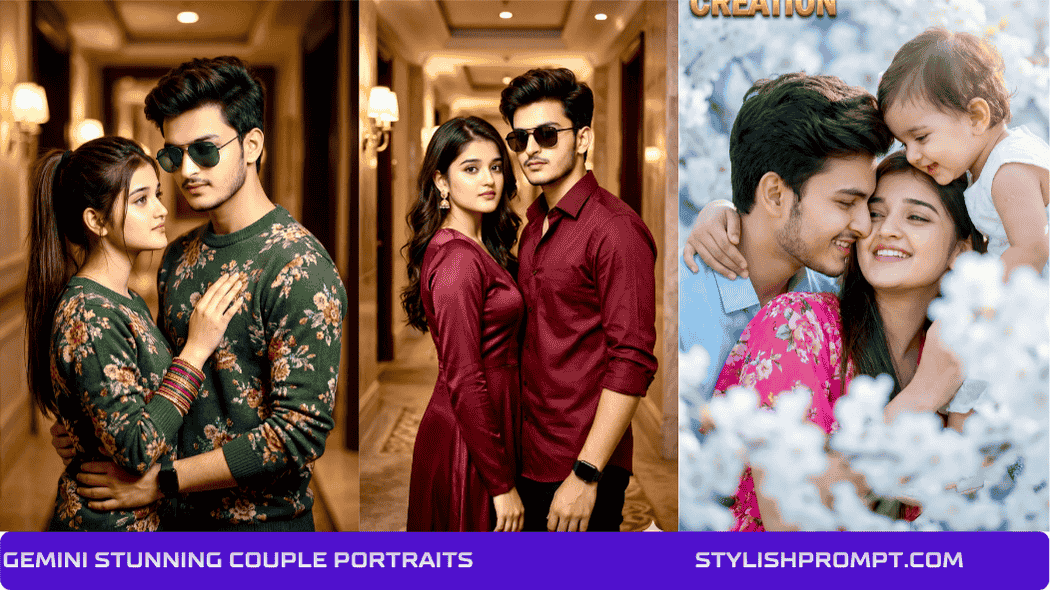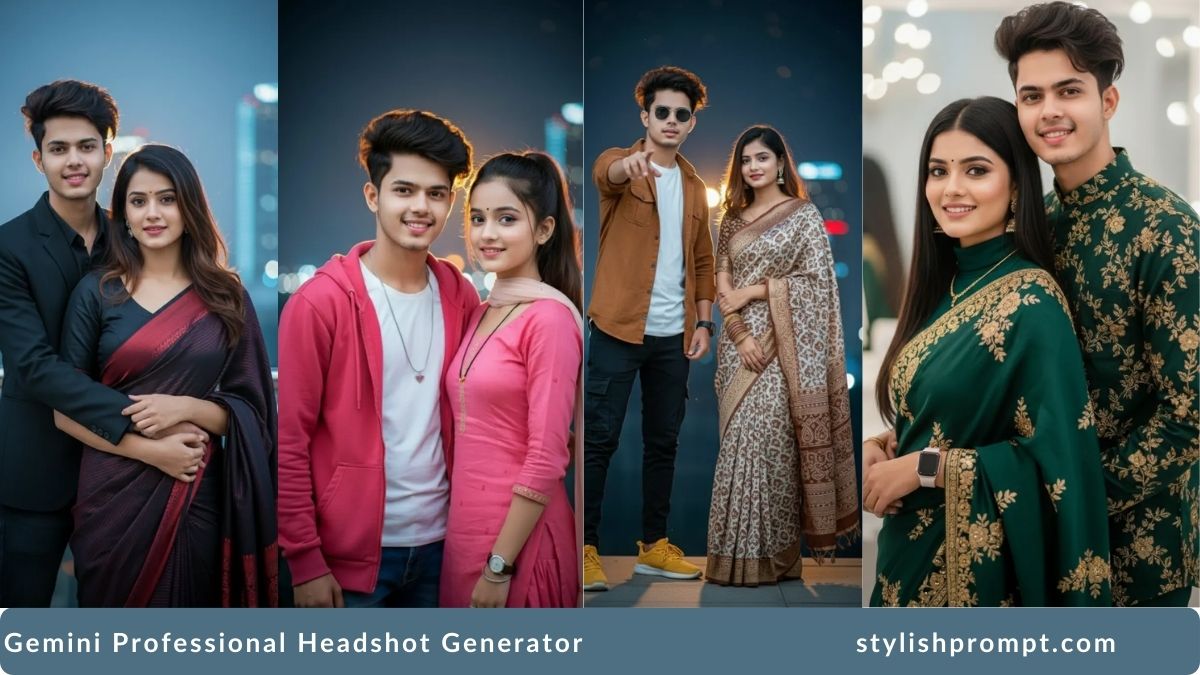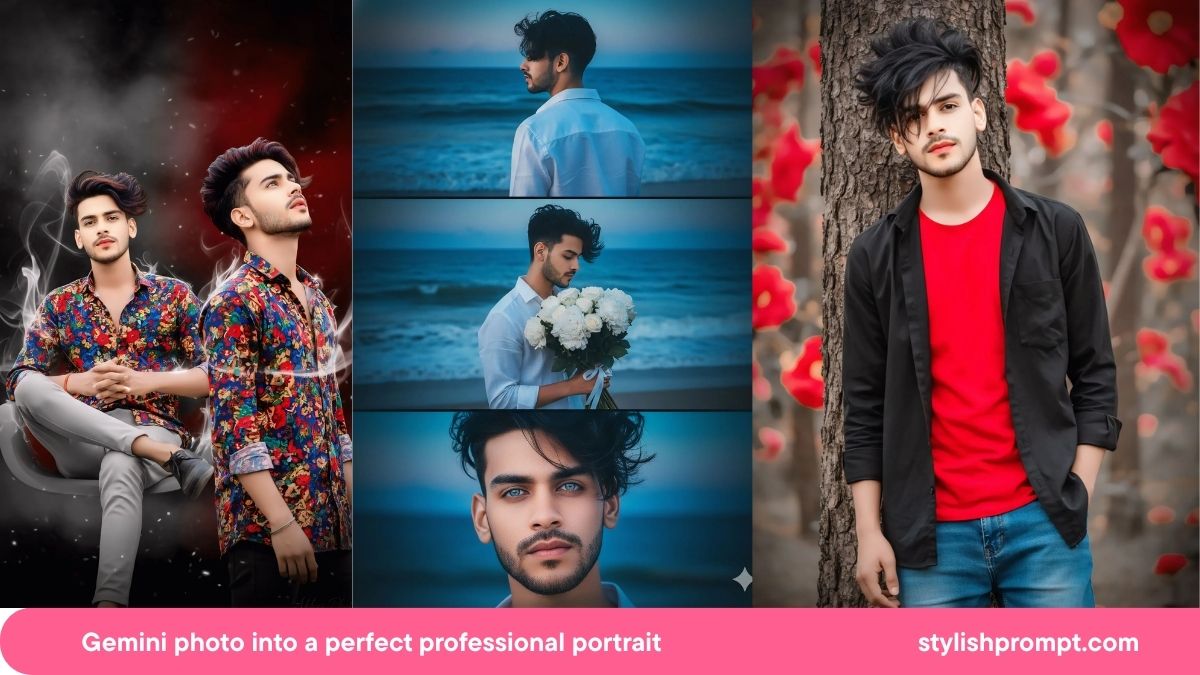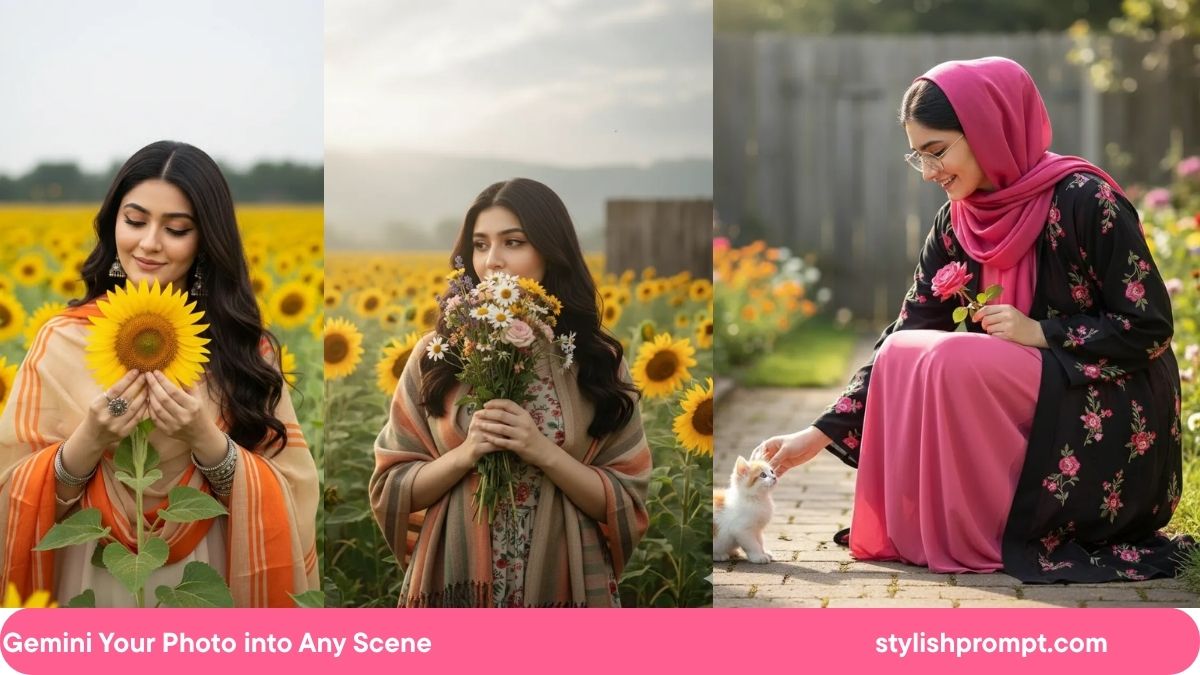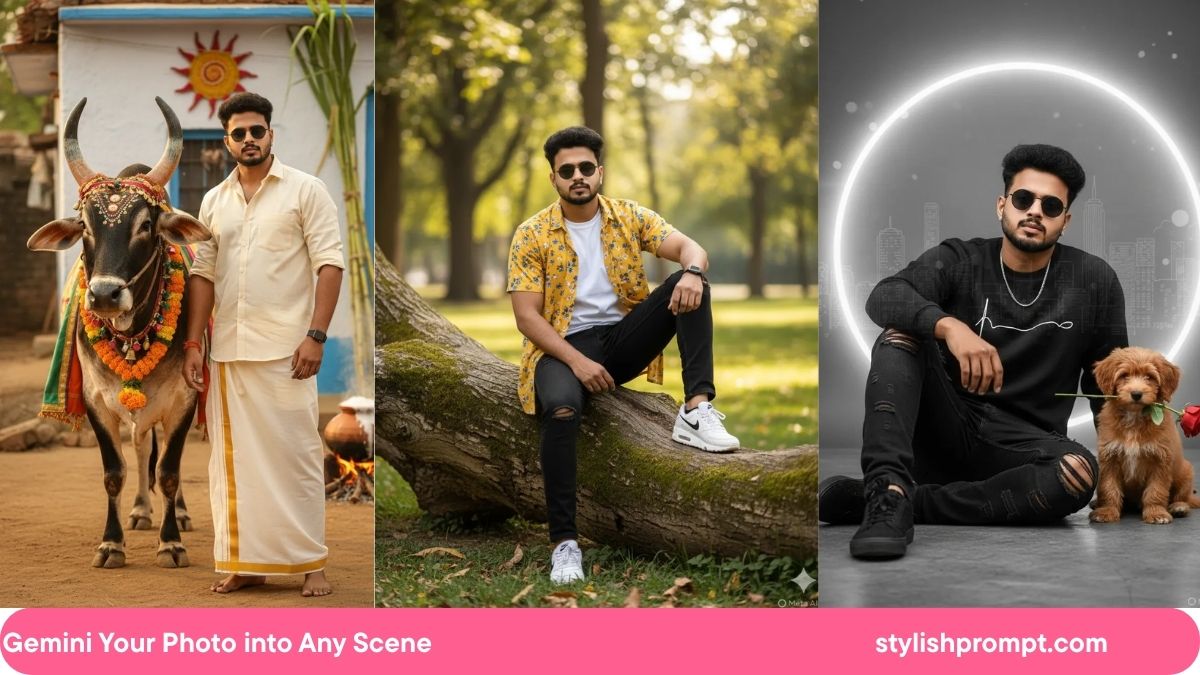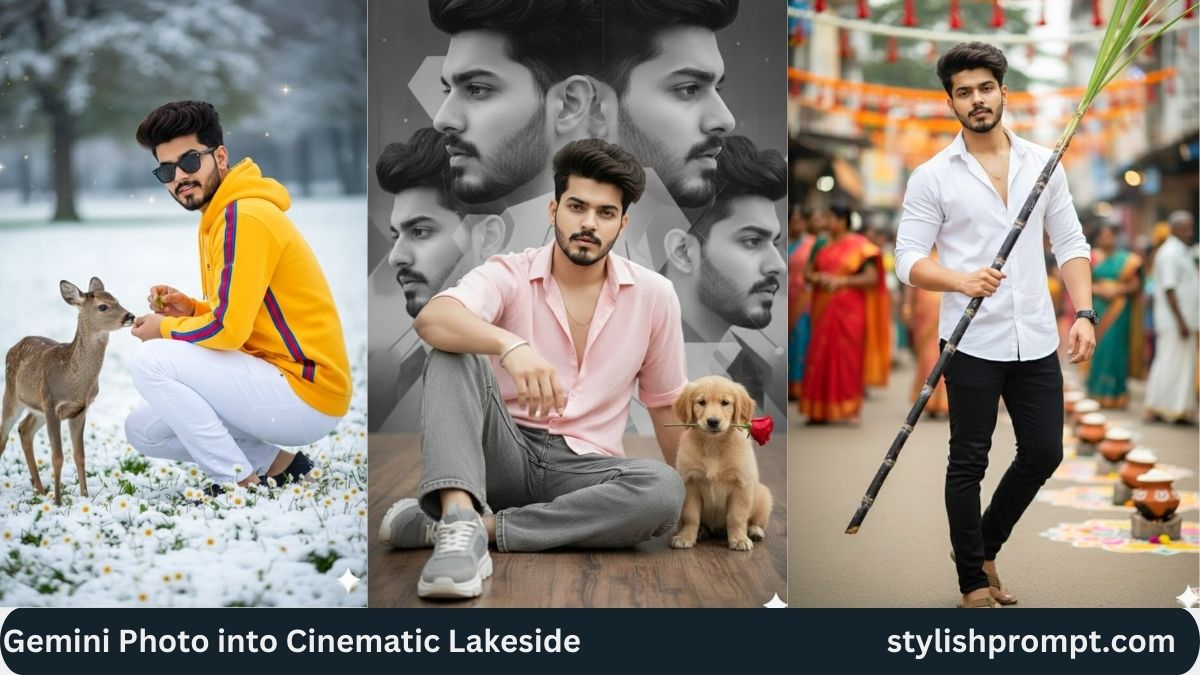
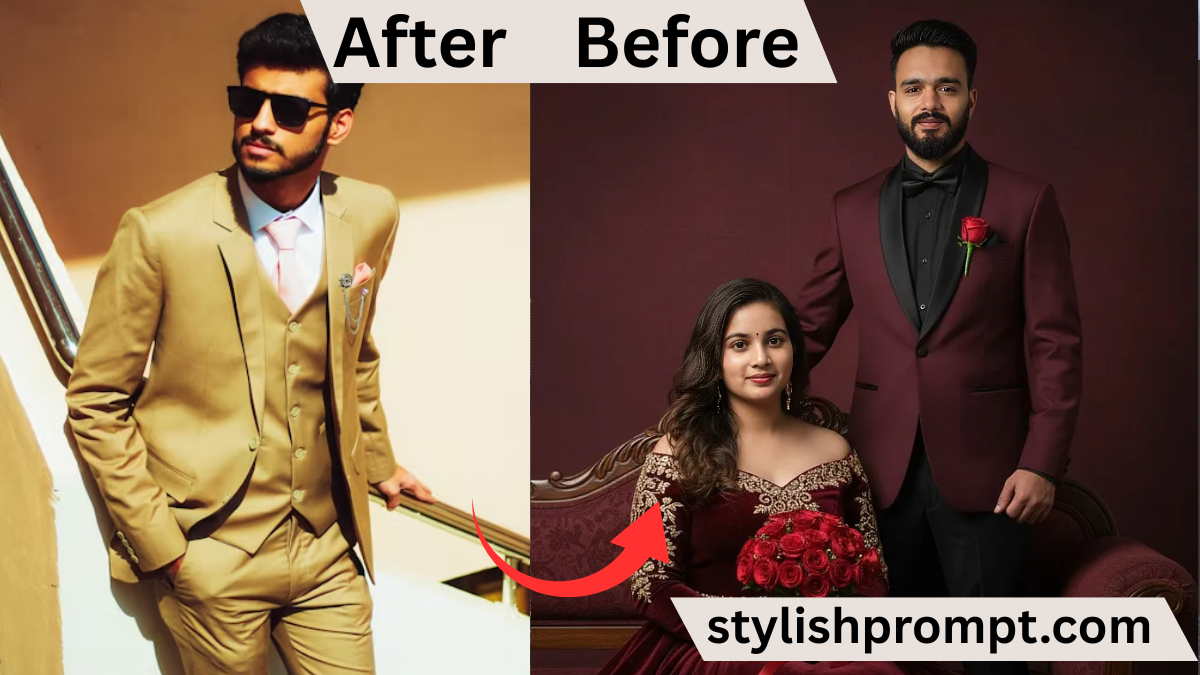
In a world where visuals dominate, transforming a simple photo into a majestic, gallery‑worthy image carries immense appeal. People love to see themselves elevated—royal gowns, dramatic lighting, rich colors. The desire to be “VIP,” to feel elevated, is powerful. And thanks to AI imaging tools, that dream is now accessible to nearly everyone.
When visitors come to your site and see that they can “upload your pic and use this prompt,” the promise is instant transformation. That’s what draws them in—it’s more than a filter; it’s a story, a fantasy, a bold identity.

The Power of Visual Identity in the Digital Age
We live in a scroll-first world. A stunning image stops the thumb. For creators, influencers, couples, and everyday users, having a high-end visual presence helps with branding, social media reach, and self‑esteem.
- Strong visuals build trust.
- Royal or cinematic style implies prestige.
- People share visuals more than texts.
Thus, your product isn’t just the AI result—it’s selfexpression in the most elegant way.
Stylish Prompt Card
Paste your AI prompt below. Then just click copy and use it anywhere you like!
Why This Specific Prompt Works Strongly
The prompt you (or your users) will paste carries very precise, evocative instructions:
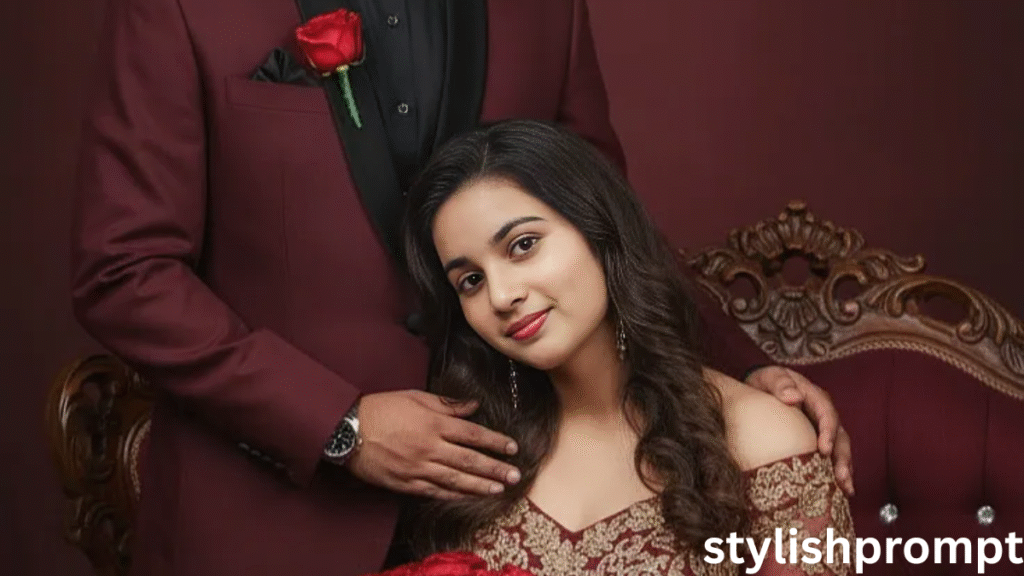
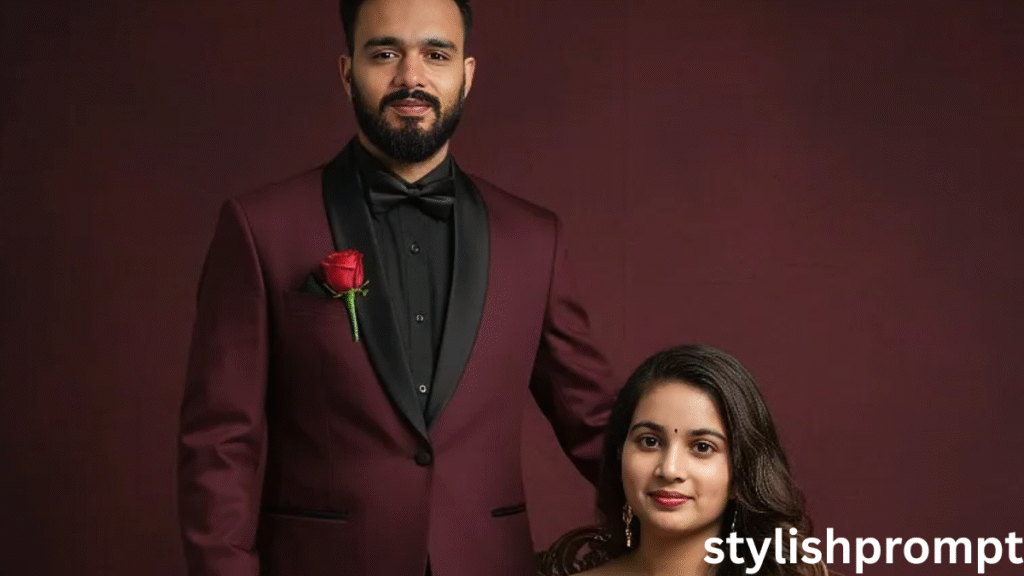
- “Ultra 8K hyper-realistic studio portrait” sets expectations: highest resolution, photographer-level detail
- “Beautiful woman … sitting gracefully in an elegant deep red gown” provides a strong visual and mood anchor
- “Beside her stands a young man … styled to complement … appear naturally as a couple” ensures the model doesn’t detach the two figures
- Color cues (deep red, black) and formal wardrobe direction reduce ambiguity
In building this prompt style in past projects, I learned that clarity + constraints yield consistently beautiful results, and reduce “hallucinated artifacts” (odd limbs, odd backgrounds, weird poses).

My Story: How I Discovered the Magic of Prompts
Let me take you back a few years. I was experimenting with AI portrait tools, feeding random text prompts and mixing them with user photos. Initially, results were inconsistent—some images had odd arms or floating jewelry.
One evening, I sat with a friend and her fiancé, and I decided to try a dramatic prompt: “Royal ballroom, evening gowns, candlelit ambiance.” We tested it on a couple’s photo. To my delight, the result looked like a movie poster.
That moment changed everything for me. I dove deep into prompt design, studied what words triggered better rendering—“ultra detail,” “studio lighting,” “poetic but specific” —and refined until I reached a formula. The formula I now share with clients, and the one you will place in your prompt spot above, is the fruit of that journey.
Technical Insights Behind AI Portrait Quality
Here are some of the elements (behind the scenes) that make or break an image:
- Lighting and depth cues: specifying studio lighting helps the model avoid flatness
- Color harmony instructions: matching outfits and complementary tones bind the figures
- Pose and relation constraints: telling the model how subjects relate avoids disjointed positioning
- High resolution and detail demand: words like “8K” push the model toward finer textures
- Avoiding negative space: reducing empty backgrounds ensures the focus stays on subjects
When you instruct users to include these in the prompt, they (unknowingly) get much better output.
Pros & Cons of This Approach
| Pros | Cons / Challenges |
| Very high visual impact | Requires good source photo (face clearly visible) |
| Easy shareability | Some AI tools may misinterpret ambiguous prompts |
| Scalable: many users can do it themselves | Not all image models support prompt + image inputs |
| Encourages repeat engagement | Over-prompting may lead to overfitting or weird artifacts |
Comparison: Simple Filter vs. Custom Prompt Transformation
| Feature | Simple Filter (app) | Custom Prompt + AI Tool |
| Flexibility | Limited to preset styles | Fully customizable via prompt |
| Uniqueness | Many users look the same | Each portrait unique |
| Quality | Moderate resolution, possible artifacts | High-end detail, depth, realism |
| Control | Low control | High control over style, lighting, mood |
By offering a custom prompt-based transformation, you stand out from generic filter apps.
People Also Ask (PAA) — What Your Visitors Might Query
- How do I turn my photo into a royal painting with AI?
Explain the concept of prompt + image input, and direct them to your page with the prompt. - What prompt works best for hyper‑realistic portrait images?
Talk about specifying lighting, attire, emotional tone, resolution cues. - Can I use ChatGPT to make images from my photo?
Clarify which AI models support image inputs (e.g. GPT‑4 Vision, stable diffusion versions, etc.) - Why doesn’t my generated portrait look realistic?
Common issues: poor source photo, vague prompt, contradictory instructions. - How long does it take to generate a result?
Usually seconds to a minute depending on the model.
You can weave answers to these into your article or FAQ.
FAQ (3–5 Questions & Answers)
Q1: Do I need a special camera or photo?
A1: No, you just need a clear, well-lit image where the face(s) are visible. Natural or studio shots both can work, though avoid extreme blur or dark shadows.
Q2: Which AI model should I use?
A2: Use a model that supports image + prompt input (for example, GPT‑4 Vision, Stable Diffusion variants, MidJourney with image prompts). Ensure the model allows high resolution.
Q3: Can I adjust the prompt further?
A3: Yes, advanced users can tweak lighting, gaze direction, wardrobe, but the base prompt you paste gives consistent excellent results.
Q4: Will the image look like me (identity)?
A4: The more your input photo clearly shows your facial features, the more the AI can preserve likeness while applying style.
Q5: Is it safe / legal?
A5: As long as users upload only their own photos, and your service has proper terms of use, this is legal. Ensure privacy and disclaimers if required.
Hi, I’m Muhammad Arslan from Pakistan. Here, you’ll find multiple powerful prompts that you can use on platforms like Google Gemini or ChatGPT to turn your personal photos into stunning AI-generated portraits.